Anesthesia machine
Helps deliver oxygen and anesthetic gases during surgery. Biomeds check leaks, alarms, vaporizers, hoses, batteries, and safety systems.
Learn the Field
Biomeds keep medical equipment safer, documented, maintained, and ready for patient care. This page helps curious students, nurses, military techs, mechanics, IT-minded people, and hands-on problem solvers understand the path.
Start here
A good Biomed can talk to a nurse about what failed, read the service manual, test the device, document the work, and know when a unit should stay out of service. It is hands-on, practical, and quietly important.
Equipment tour
Think of a Biomed like the person who helps keep the hospital's tools ready. The doctor or nurse uses the equipment with patients; the Biomed checks, fixes, tests, and documents the equipment so the clinical team can trust it.
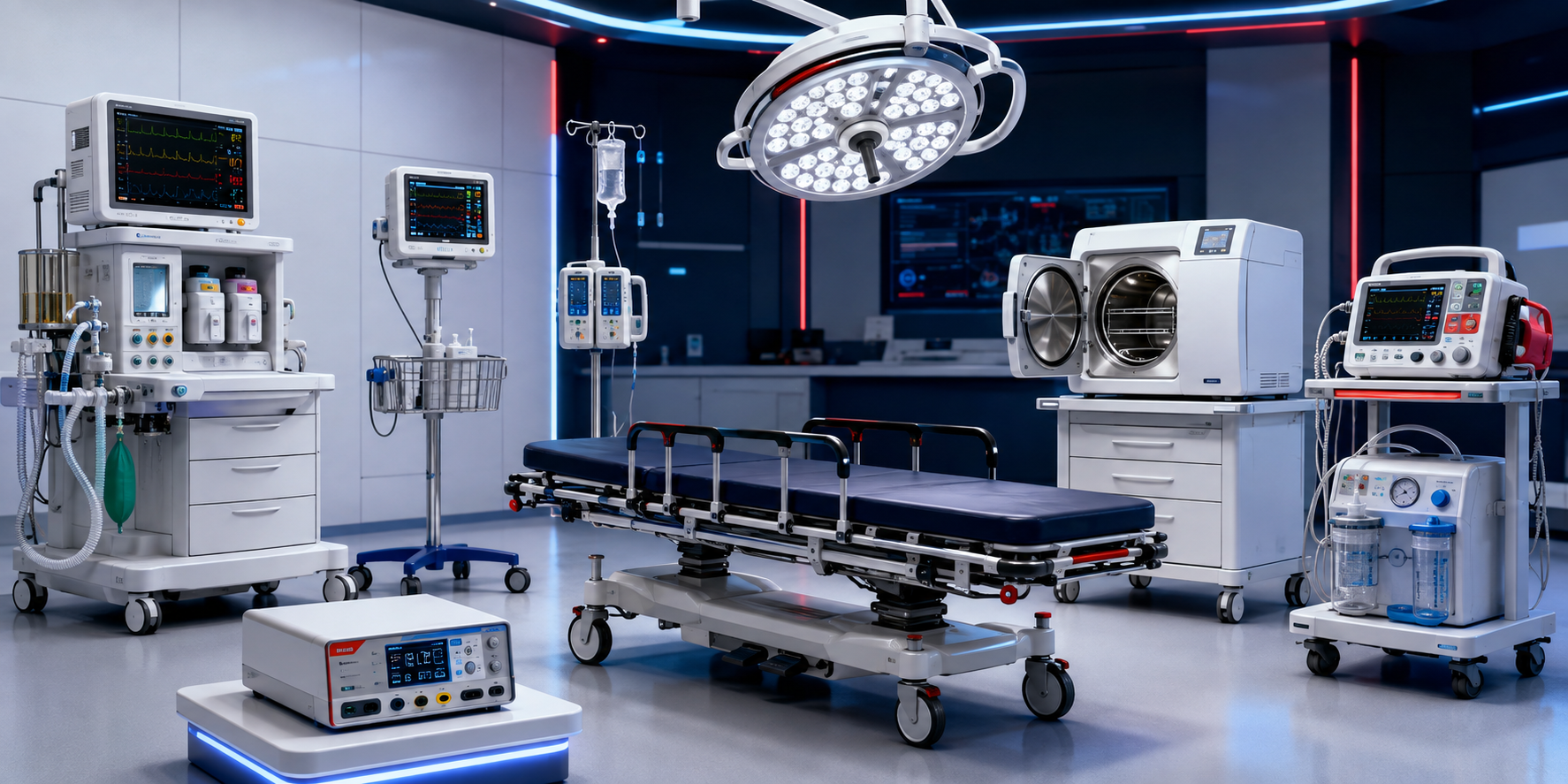
Helps deliver oxygen and anesthetic gases during surgery. Biomeds check leaks, alarms, vaporizers, hoses, batteries, and safety systems.
Shows heart rhythm, oxygen level, blood pressure, and other vital signs. Biomeds check cables, modules, displays, batteries, and accuracy.
Pushes medicine or fluids at a controlled rate. Biomeds check flow, alarms, door sensors, batteries, and pump safety.
An electrosurgical unit helps surgeons cut or seal tissue with controlled electrical energy. Biomeds check output, pads, cords, alarms, and safety.
Moves and positions patients safely. Biomeds check brakes, steering, locks, rails, hydraulics, wheels, and damaged hardware.
Uses heat, steam, or other processes to sterilize instruments. Biomeds check cycles, seals, sensors, printers, and error logs.
Can deliver a controlled shock to help during certain heart emergencies. Biomeds check batteries, pads, cables, self-tests, and output testing.
Creates vacuum to remove fluids. Biomeds check pressure, tubing, jars, filters, regulators, and electrical safety.
Brightly lights the surgical field. Biomeds check movement, handles, bulbs or LEDs, brakes, focus, and power.
Biomedical equipment technicians inspect, maintain, troubleshoot, document, and coordinate service for medical devices such as monitors, ESUs, anesthesia machines, stretchers, pumps, warmers, and surgical equipment.
People who enjoy fixing things, helping clinical teams, reading manuals, using test equipment, solving odd problems, and learning a mix of electronics, mechanics, computers, safety, and healthcare workflow.
Start by learning basic electronics, medical-device safety, common equipment names, manufacturer manuals, electrical safety testing, documentation habits, and how to ask clear troubleshooting questions.
The best biomeds are careful, honest, organized, calm under pressure, and willing to say when something needs a qualified second opinion or manufacturer support.
Common paths include hospital Biomed departments, independent service companies, field service roles, manufacturer service, imaging support, dialysis support, surgery-center support, and healthcare technology management.
Over time this education area can hold beginner videos, equipment explainers, glossary pages, practice checklists, and field notes from CMooreMedical service work.
Learning path
Education library
This can become the public learning side of CMooreMedical: beginner videos, equipment explainers, safety basics, service-note examples, and real field lessons cleaned up for teaching.
A plain-language overview of the role and why it matters.
Names, uses, and what goes wrong most often.
Complaint, findings, action taken, tests, parts, and pass/fail.
Coming Soon / In Development
Bring the Biomed workflow into one place.